Discover · Create · Run · Observe · Iterate








Template-first tooling for editable local agent applications and their complete development lifecycle.
Experience the local ADLC · What is AgentSeek? · Lifecycle · Guided templates · Community
⭐ Star AgentSeek to follow its progress.
AgentSeek is a template-first toolkit for local agent application development. It gives editable generated projects one predictable lifecycle: discover, create, inspect, configure, check, run, observe, and iterate.
AgentSeek 0.1.1 resolves lifecycle-v2 templates from the immutable
agentseek-ai/agentseek-templates catalog.
The CLI lists templates from its embedded registry snapshot and fetches named
template content at the exact locked commit.
Start with the shipped deepagents/research walkthrough. It creates a fully
editable DeepAgents research app with a native LangGraph backend and a React frontend
as its primary user experience.
# Install the lifecycle CLI, then create and enter the generated project.
uv tool install agentseek
agentseek create deepagents/research --no-input
cd research_deepagent

# Inspect declared entry points before configuring local credentials.
agentseek info
cp .env.example .env
cp frontend/.env.example frontend/.env
$EDITOR .env

# Run the setup tasks declared by this project, then check readiness.
agentseek task --list
agentseek task sync
agentseek task frontend
agentseek doctor

# Preview the native commands, run the local stack, and check live services.
agentseek dev --dry-run
agentseek dev
# In another terminal, after agentseek dev starts, check live services.
agentseek doctor --live
The current scaffold declares only sync and frontend setup tasks. Its
native backend resolves to uv run langgraph dev --port 2024 --no-browser,
while the frontend resolves to npm run dev in frontend/.
For a one-off run, use uvx agentseek create deepagents/research --no-input
instead of installing the CLI.
AgentSeek supplies the stable lifecycle surface around a generated project; it does not own that project's source, framework, runtime, or deployment. A template selects those pieces, and the generated project remains yours to edit.
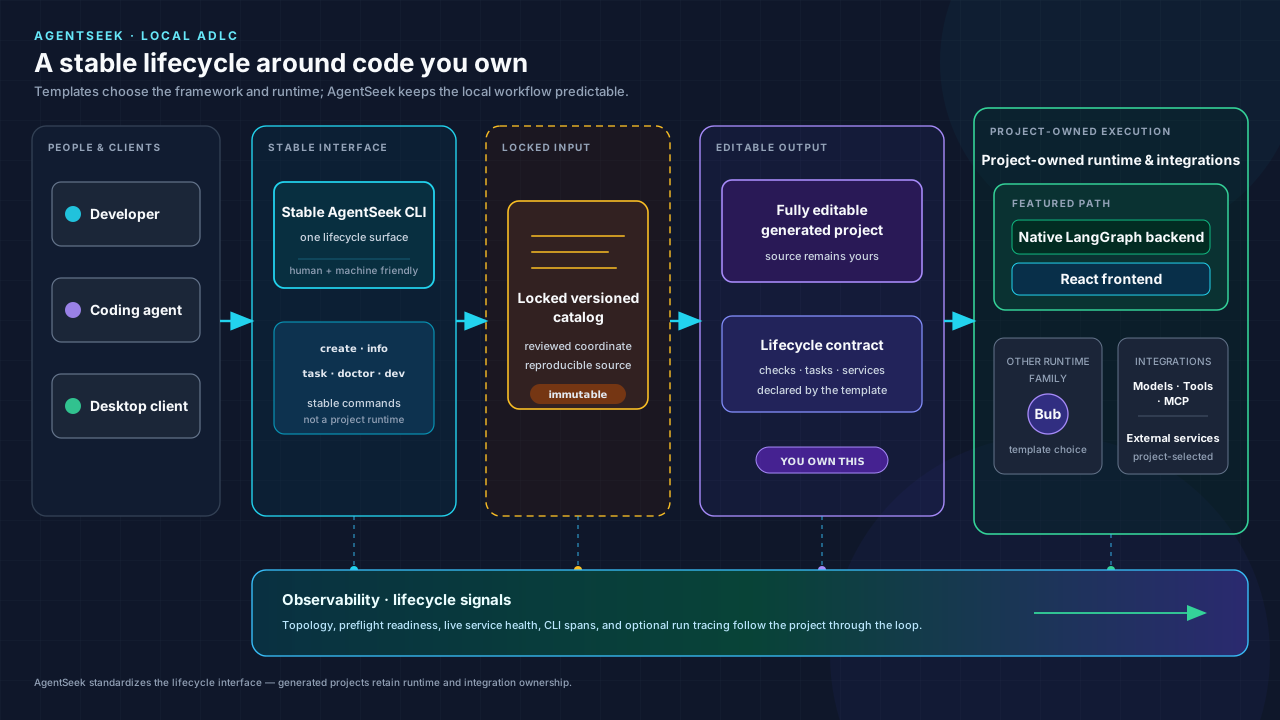
The CLI connects people, coding agents, and desktop clients to a locked, versioned template catalog and an editable project lifecycle contract. The project then owns its runtimes and integrations, including models, tools, MCP servers, and external services.
The local ADLC keeps iteration anchored in the existing project instead of starting over: discover, create, inspect, configure, check, run, observe, and iterate back to inspect.
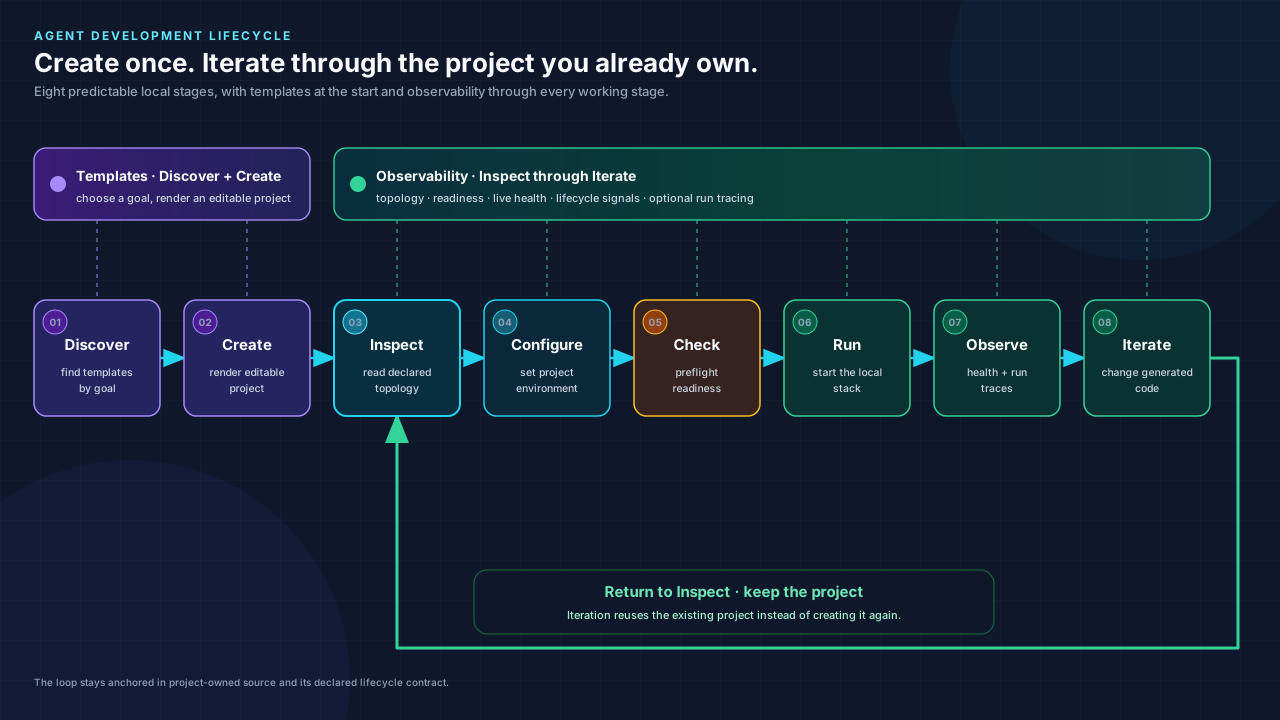
| Stage | Local command or project surface |
|---|---|
| Discover | agentseek create --list-templates finds templates by goal. |
| Create | agentseek create renders an editable project. |
| Inspect | agentseek info shows its declared entry points and topology. |
| Configure | .env and project configuration provide runtime credentials and choices. |
| Check | agentseek doctor validates local readiness. |
| Run | agentseek dev starts the template-owned local stack. |
| Observe | agentseek doctor --live and lifecycle signals show its current state. |
| Iterate | Change the generated project, then return to Inspect. |
Lifecycle diagnostics answer whether the declared project is ready and running:
agentseek info shows topology, agentseek doctor performs preflight checks,
and agentseek doctor --live checks declared services after startup. For
Desktop, scripts, and other machine consumers, use the versioned JSON contract
instead of parsing human output.
agentseek info --json
agentseek doctor --json
agentseek doctor --live --json
AGENTSEEK_CONSOLE=true agentseek doctor --live
info --json contains normalized services, references, and safe actions such
as which URL can be opened directly. It never includes environment values or
raw process or task commands. AGENTSEEK_CONSOLE=true enables local CLI spans
and lifecycle events. Optional LangSmith tracing, configured through the
settings already present in deepagents/research, answers what the agent did
inside an individual run. When your LangSmith API key belongs to the APAC or
another non-default region, set LANGSMITH_ENDPOINT explicitly (for example
https://apac.api.smith.langchain.com); otherwise traces may fail to upload
to the cloud. See the observability and tracing guide for setup and troubleshooting.
Choose by goal, then inspect a specific template before creating it. AgentSeek maintains many templates without requiring you to memorize a catalog dump.
agentseek create --list-templates
agentseek create --list-templates --filter deepagents
agentseek create deepagents/research --describe| Concept | What it provides |
|---|---|
| Template | A complete, editable application scaffold with its chosen runtime. |
| Lifecycle file | The project-owned declaration of paths, environment checks, services, processes, and tasks. |
| AgentSeek CLI | A consistent local interface for the declared lifecycle. |
| Command | Purpose |
|---|---|
create |
Render an application template. |
info |
Show declared entry points and lifecycle metadata. |
task |
Run a project-defined setup task. |
doctor |
Check local readiness or live declared-service health. |
dev |
Run the local development stack. |
Explore Deep Agents in Action, a free LangChain / DeepAgents course with AgentSeek labs, in the course repository. Read the documentation, join GitHub Discussions, browse or report an issue, or follow the contribution guide.


git clone https://github.com/ob-labs/agentseek.git
cd agentseek
make install
make check
make test
make docs-testContributions, fixes, and template improvements are welcome.