Anonymous comments and reactions for Payload 3.x — with Markdown comment bodies, optional pre-publish moderation, mood emojis, reactions on comments, and up to 3 levels of replies.
- Anyone can comment (name + optional/required email) with a mood emoji.
- Comment bodies support a safe subset of Markdown (bold, italic, code, links, lists, blockquotes); raw HTML is never rendered (no XSS).
- React to existing comments with a configurable emoji set.
- Optional approval workflow before comments are published — toggleable at runtime.
- Up to 3 levels of nested replies.
- Built-in lightweight anti-spam (honeypot, rate limiting, length/link rules).
- Comments Settings global: enable/disable comments per collection at runtime.
- Comment Statistics admin view: KPIs, per-collection and per-mood breakdowns, and recent comments, with filters.
- Ready-to-use
<Comments />React component, or build your own on the REST API.
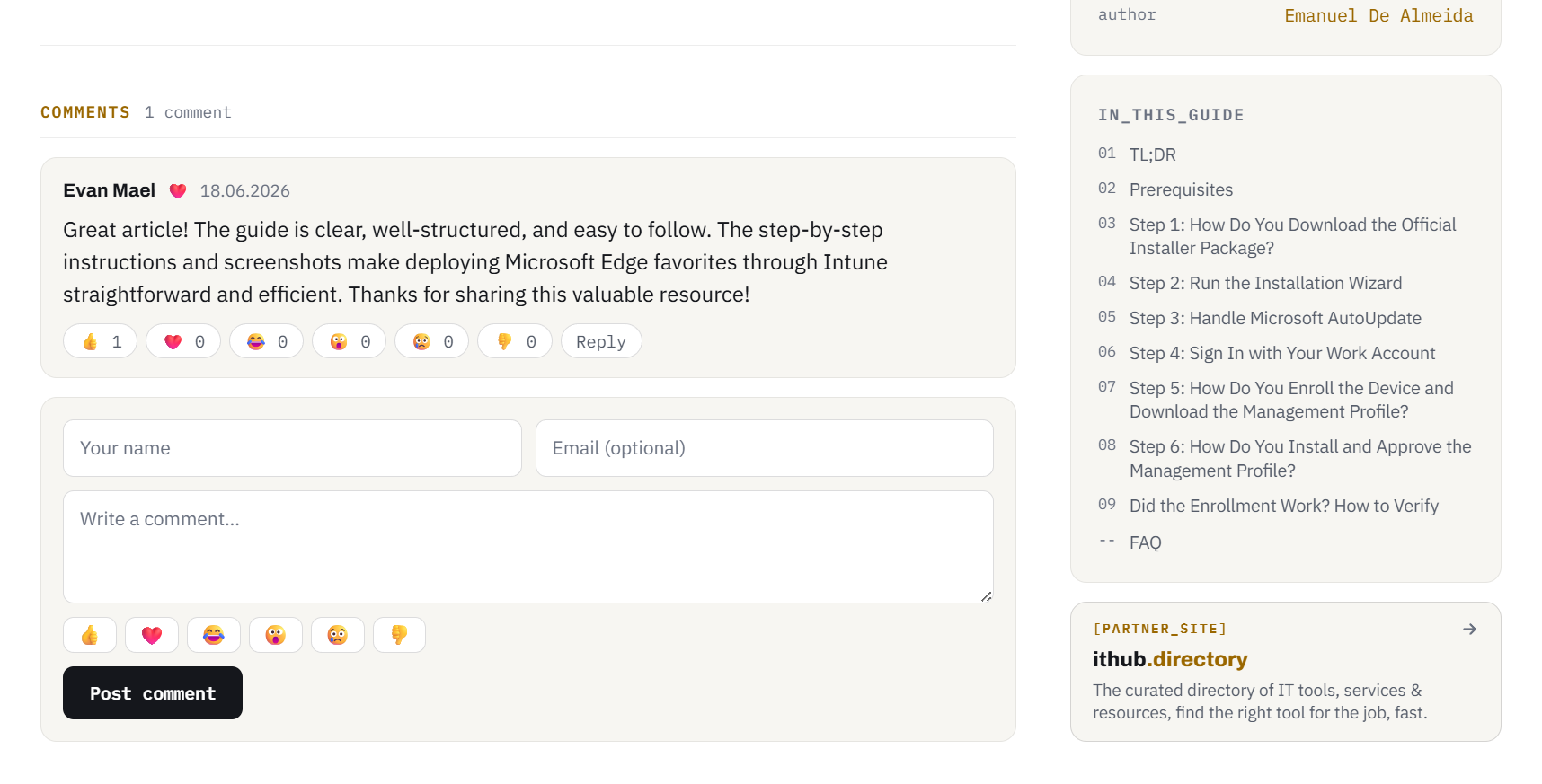
The bundled <Comments /> component on a published page: a threaded comment with a Markdown-rendered body, a mood emoji and a date, a reaction row and a reply button, plus the composer (name, optional email, Markdown text and mood).
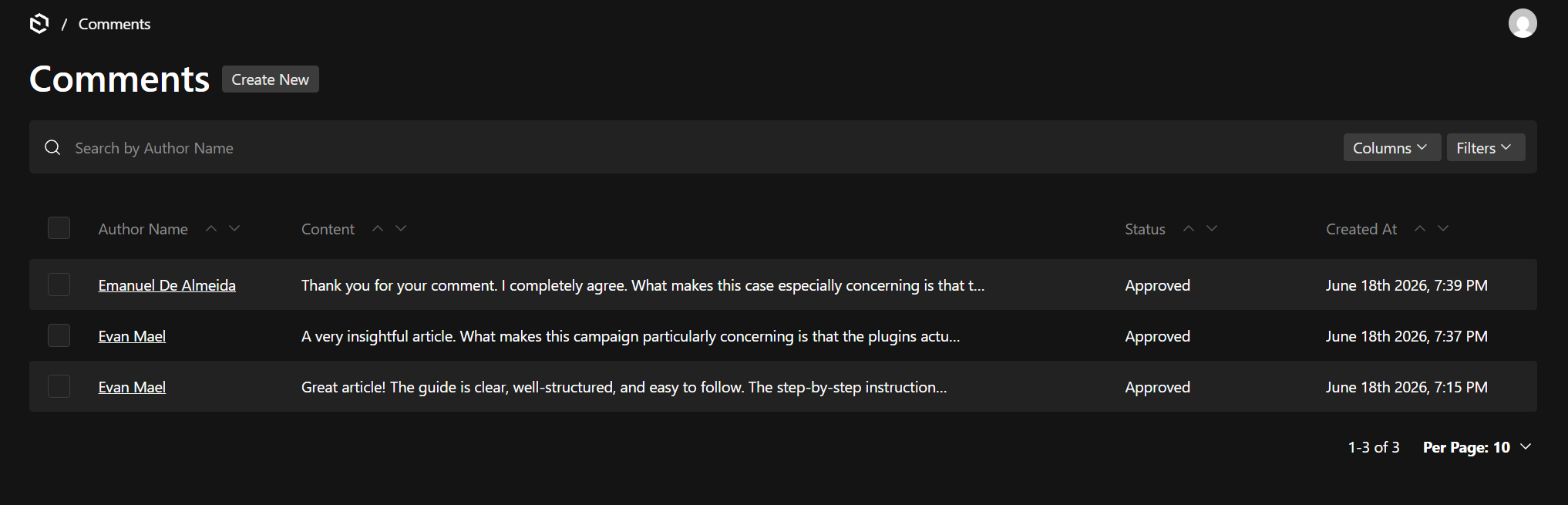
Every comment lands in a standard Payload collection, so moderation uses the admin UI you already know. The list is your moderation queue — author, excerpt, a Thread indicator (top-level vs "↳ Reply to <author>"), target document, status and date — with native filtering and bulk actions; approving a pending comment publishes it instantly.
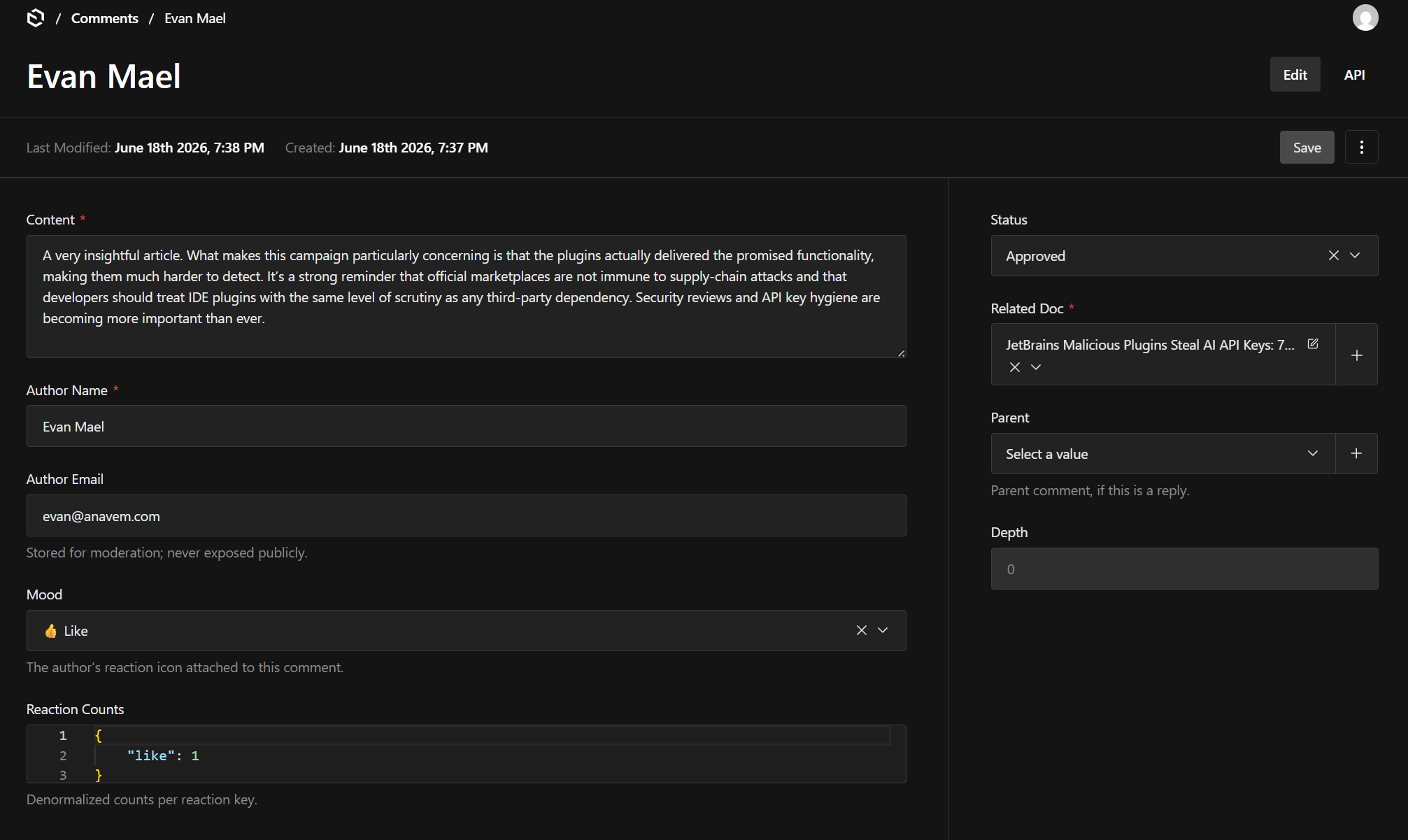
Opening a comment shows its full record — author and email, mood, the related document and threaded parent, the salted IP/fingerprint hashes used for anti-spam — and the status selector to approve, mark as spam, or trash it.
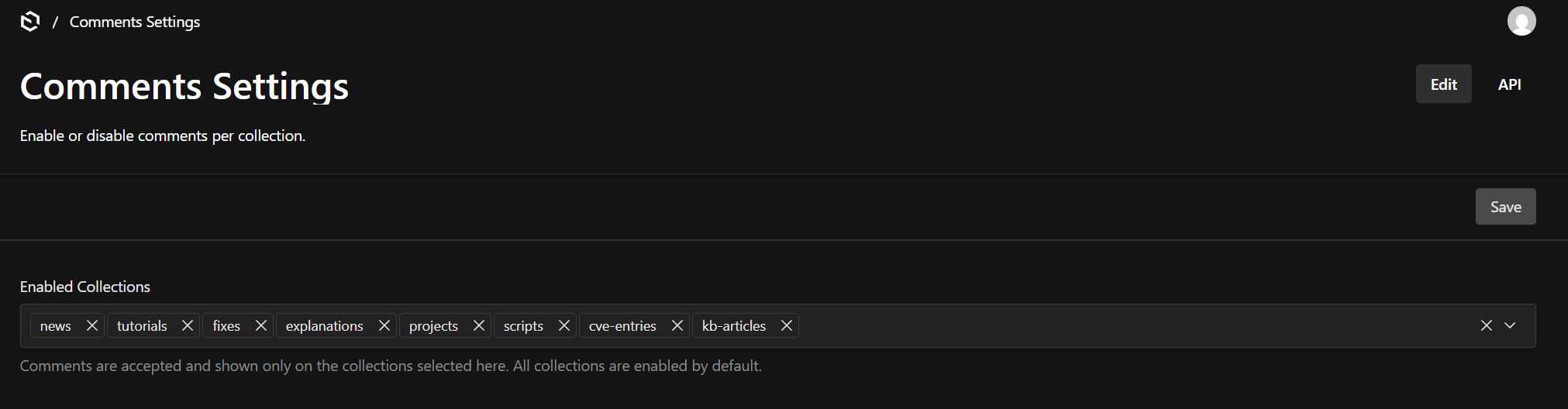
The Comments Settings global toggles commenting per collection at runtime and exposes the Require approval switch, so you can turn mandatory pre-publish moderation on or off without a redeploy.
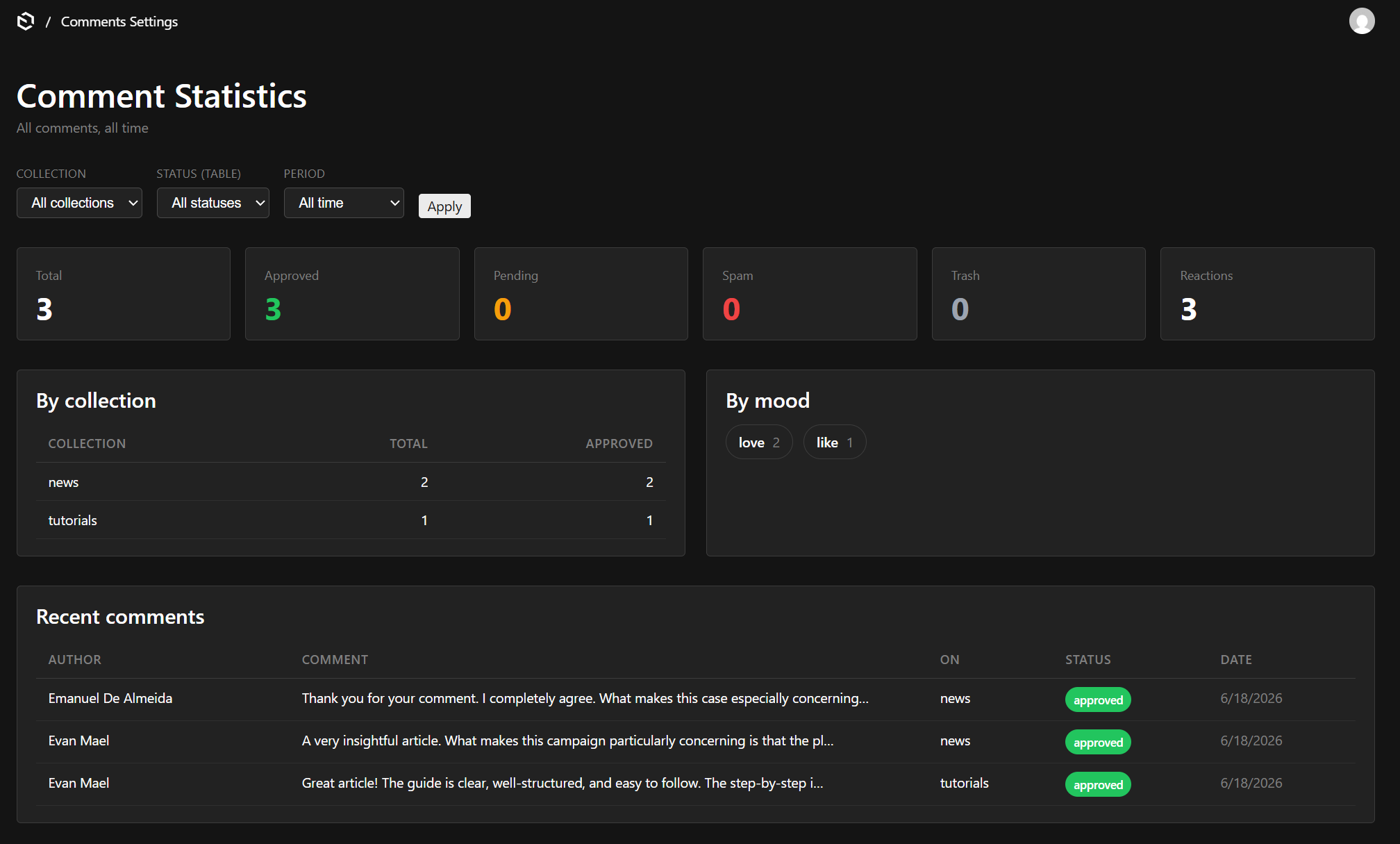
The Comment Statistics view: KPIs (totals by status, reaction count, per-day rate), per-collection and per-mood breakdowns, and a recent-comments table — all filterable by collection, status and period, and auth-gated server-side.
pnpm add @navanem/payload-comments
# or from Git until published:
pnpm add github:navanem/navanem_payload_commentspayload, react and react-dom are peer dependencies.
// payload.config.ts
import { commentsPlugin } from '@navanem/payload-comments'

export default buildConfig({
  // ...
  plugins: [
    commentsPlugin({
      enabledCollections: ['posts', 'pages'],
      requireApproval: true,
      requireEmail: false,
    }),
  ],
})
Set a salt for IP hashing in your environment:
COMMENTS_IP_SALT="a-long-random-string"The plugin registers a Comments Settings global (admin group "Comments") where
an admin can toggle commenting per collection at runtime. When a collection is
disabled, new submissions are rejected and the <Comments /> widget shows a
"closed" notice instead of the thread. Unset = every configured collection is
enabled (fail-open). The same global has a Require approval checkbox to turn
mandatory moderation on/off at runtime; the submit flow reads it live and falls
back to the requireApproval option.
It also registers a Comment Statistics view at /admin/comments-statistics
(KPIs, per-collection and per-mood breakdowns, and recent comments, filterable by
collection / status / period), plus a nav link to it via afterNavLinks. The view
queries moderation data server-side and is gated on an authenticated admin user.
The view and nav-link components are referenced through the host import map at the
vendored path @/plugins/payload-comments/components/*. If you vendor this plugin
under src/plugins/payload-comments, add the matching import-map entries (run
payload generate:importmap, or add them by hand). Hosts that ship a custom Nav
can ignore the afterNavLinks entry and place the Statistics link themselves.
import { Comments } from '@navanem/payload-comments/client'

export default function PostPage({ post }) {
  return <Comments relationTo="posts" docId={post.id} />
}
See docs/frontend-integration.md for props, styling and a no-component (raw API) integration.
MIT © navanem
Built by navanem and running in production on www.navanem.com.