⚠️ API & architecture have changed (workspaces refactor)The code on
mainnow uses a workspace-aware API with ACCOUNTS / INVENTORY modes and/api/workspaces/{id}/...endpoints.If you want the new version (recommended for future work):
git checkout mainIf you need the old, pre-workspaces API exactly as shown in the demo below while the new UI is still in progress, use the legacy tag:
git checkout v0.1-legacy
# or
git clone https://github.com/darksolitaire9-hub/logi-hex -b v0.1-legacy
The legacy API (
/api/movements/issue,/api/summary, etc.) is frozen and will not receive new features. All new work happens onmain.
logi-hex is a tiny, stubbornly practical app for tracking things that come back.
Crates. Trays. Camera lenses. Sample kits. Beer kegs. Mystery boxes.
If you lend it and expect it back, logi-hex wants to remember it better than you do.
Built with a hexagonal architecture, a real database, and a very patient AI collaborator.


This started with a friend who runs a business.
He sends stuff out with customers. Most of it comes back.
Some of it… never does.
They tried The Spreadsheet. It technically worked, but it felt like this:
+-----------------------------+
|  Sheet1 (Final_v3_REAL.xlsx)|
+-----------------------------+
| A  | B    | C     | D      |
|----+------+-------+--------|
| ???| who? | what? | when?  |
+-----------------------------+
It was easy to forget to open it, to forget to log returns, to forget what the columns meant. The tool itself was friction.
So logi-hex was born: a small tool that says:
- “Tell me who, what, and how many.”
- “I’ll remember, forever.”
- “I’ll politely stop you from doing impossible things, like returning more than you gave out.”
Right now, it’s being dogfooded in that real business: what you see is what’s actually used to keep their stuff flowing.
Let’s follow a single movement: you issue 3 “Large Crates” to “Alice”.
You open the Issue OUT modal, pick “Alice”, select “Large Crate” and enter 3.
[Human] → [Browser UI] → [API] → [Backend] → [Database]
    |         |             |        |          |
    |         |             |        |          +--> rows are written
    |         |             |        +--> domain rules decide if it's valid
    |         |             +--> HTTP POST /api/movements/issue
    |         +--> Vue form + composables
    +--> click, type, submit
In the frontend:
LogModal.vuebuilds aLogMovementPayload:
{
  direction: "OUT",
  clientName: "Alice",
  primaryCategoryId: "containers",
  containerTypeId: "large-crate",
  quantity: 3,
  contentTypeIds: ["frozen"], // optional tags
  note: "Launch-week delivery"
}useApp.logMovementcallslogMovementApi(payload).logMovementApisends aPOSTto/api/movements/issue.
Visually:
+-------------------+
|   LogModal.vue    |
|-------------------|
| build payload     |
| validate form     |
+---------+---------+
          |
          v
+-------------------+
|   useApp()        |
|-------------------|
| logMovement(...)  |
|  → logMovementApi |
+---------+---------+
          |
          v
+-------------------+
|  /api/movements   |
|   (ofetch)        |
+-------------------+
FastAPI receives JSON at /api/movements/issue and:
- Validates it against a Pydantic model.
- Injects a
LogiFacadeinstance via dependency injection. - Calls
facade.issue_items(...)with domain-flavored arguments.
HTTP JSON
   |
   v
+------------------------+
| FastAPI route handler  |
|------------------------|
| parse request body     |
| call LogiFacade        |
+-----------+------------+
            |
            v
+------------------------+
|     LogiFacade         |
| (application layer)    |
+------------------------+
LogiFacade coordinates the use case:
- Looks up or creates the
Client(“Alice”). - Delegates to domain services (
issue_items/issue_containers). - Uses repositories via ports to persist transactions.
- Commits the Unit of Work.
In pseudocode:
client = await client_repo.get_or_create_by_name("Alice")
tx = await services.issue_items(
    name=client.name,
    primary_item_quantities={"large-crate": 3},
    secondary_item_ids=content_type_ids,
    notes=note,
    ...
)
await uow.commit()The domain service checks:
- Does the primary category exist and enforce returns?
- Does the tracking item
"large-crate"exist, belong to that category, and is it active? - Are secondary (content) items valid and active?
If everything is OK:
- It creates a
Transactionentity with:- A fresh UUID.
- Timestamp.
- Client ID + name.
- Direction
OUT. - Line items and secondary items.
- The infrastructure layer then persists it.
If something is not OK (e.g. returning more than outstanding), the domain raises an exception. The API turns that into a structured error, and the frontend shows it inline in the modal.
+-----------------------------+
|       domain/services       |
|-----------------------------|
| issue_items / return_items  |
|  - validate category        |
|  - validate items (active)  |
|  - enforce balances         |
+-----------------------------+
            |
            v
+-----------------------------+
|      domain/entities        |
|  Transaction, Client, etc.  |
+-----------------------------+
Transactions are written into the database. A separate query layer computes:
- Balances (
OUT - IN) per(client, item)pair. - Per-client summaries.
- The grand total.
The dashboard calls /api/summary, which returns:
{
  "clients": [
    {
      "client_name": "Alice",
      "total_outstanding": 3,
      "balances": [
        {
          "container_label": "Large Crate",
          "container_type_id": "large-crate",
          "balance": 3
        }
      ]
    }
  ],
  "grand_total": 3
}
The frontend maps this to a human-friendly table.
Here’s the “big picture” in ASCII:
        +--------------------+
        |     Browser UI     |
        |  (Vue components)  |
        +---------+----------+
                  |
                  v
         +--------+---------+
         |  useApp compos.  |
         | (state + API)    |
         +--------+---------+
                  |
                  v
         +--------+---------+
         |  FastAPI routes  |
         | (/api/*)         |
         +--------+---------+
                  |
                  v
         +--------+---------+
         |   LogiFacade     |
         | (application)    |
         +--------+---------+
                  |
                  v
    +-------------+-------------+
    |        Domain layer       |
    |  entities + services      |
    +------+------+------------+
           |      |
           v      v
+----------+--+ +--+-----------+
| Repos & DB | | Summary /     |
| (SQLAlchemy| | Balance queries|
+------------+ +---------------+
And somewhere slightly off to the side, there’s an AI assistant helping design this flow:
      +-----------------------------+
      |  AI collaborator (this)     |
      |  - suggests architecture    |
      |  - helps write tests        |
      |  - helps write README       |
      +-----------------------------+
| Layer | Tools |
|---|---|
| Backend | Python 3.12+, FastAPI |
| Packaging | uv |
| ORM | SQLAlchemy (async) |
| Database | SQLite (development) |
| Frontend | Vue 3 / Composition API |
| Frontend PM | pnpm |
| HTTP client | ofetch |
Backend — create a .env file in the repo root:
APP_TITLE=logi-hex
CORS_ORIGINS=["http://localhost:3000"]
DATABASE_URL=sqlite+aiosqlite:///./logi.db
DEBUG=true
Frontend — create a .env file inside the frontend/ folder:
API_URL=http://localhost:8000
NUXT_PUBLIC_API_URL=http://localhost:8000
The defaults work out of the box for local development — you only need to change these if you use a different port, database path, or deploy to production.
# from repo root
1. uv sync
2. alembic upgrade head


# start the API server
uv run main.py
API: http://localhost:8000
cd frontend
pnpm install
pnpm run dev
App: http://localhost:3000
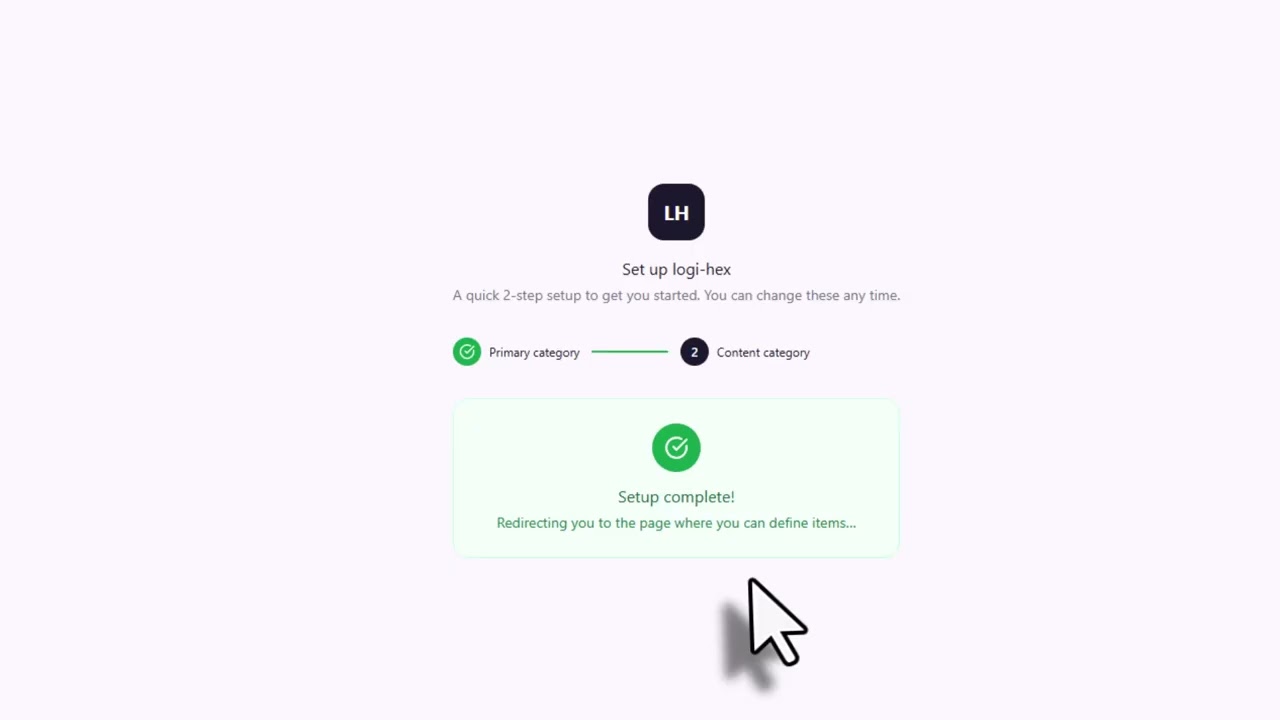
- Define your world
- Create a primary category (e.g. “Containers”, “Assets”).
- Create a content category (e.g. “Tags”, “Notes”).
- Add items and tags
- Add the actual items you lend (“Large Crate”, “Demo Kit A”).
- Add tags that matter (“Frozen”, “Urgent”, “Trial”, “VIP”).
- Log movements
- When something goes out, log an OUT movement.
- When it comes back, log an IN movement.
- The app enforces that you can’t return more than you’ve ever sent.
- Read the dashboard
- See who currently owes you what.
- See total outstanding items across everyone.
- Evolve without losing history
- If you retire an item, delete it (soft delete).
- If you bring it back, re-add with the same label and the history reconnects.
Short-term:
- Client detail view Click a client on the dashboard to open a table of all their movements.
- Movement history UI A timeline of all IN/OUT movements, filterable by client, item, tag, or date.
- Workspaces Multiple independent spaces in a single deployment (e.g. different teams or businesses).
- More modular frontend state
Breaking
useAppinto smaller composables likeuseSummary,useTrackingItems,useClients, etc.
This project has been actively developed with the help of an AI assistant:
- Refactoring and shaping the hexagonal architecture.
- Designing and adjusting domain services and test cases.
- Wiring frontend composables to backend APIs.
- Writing and revising this README.
Think of the AI as a pair programmer and technical editor sitting next to the human author, nudging the design toward clarity and consistency.
logi-hex is young, used in a real business, and open to ideas.
- If you track things that come back, your perspective is especially valuable.
- Open an issue to talk through a use case or a change.
- Keep domain rules in
domain/, orchestration inapplication/, and framework details in adapters and infrastructure. - Tests for domain logic, soft delete behavior, and balance enforcement are very welcome.
This project is licensed under the MIT License.
See the LICENSE file for details.
Certain UI ideas and components are inspired by shadcn/ui (MIT). Design mockups may include photos from Unsplash under the Unsplash license.