fastCNV is an R package that helps you detect, plot and analyse the putative Copy Number Variations (CNVs) in single cell (scRNA-seq) data or Spatial Transcriptomics (ST) data, including Visium HD. Built on SeuratObject, it is easily integrated into scRNA-seq or ST pipelines.
To install fastCNV, run in R:
remotes::install_github("must-bioinfo/fastCNV")
Cabrejas, G. et al. fastCNV: Fast and accurate copy number variation prediction from High-Definition Spatial Transcriptomics and scRNA-Seq Data. bioRxiv 2025.10.22.683855 (2025) doi:10.1101/2025.10.22.683855.
Extensive tutorials to run fastCNVon scRNA-seq and Spatial Transcriptomics data are available to get started here.
You can now run fastCNV on visium HD data using fastCNV_10XHD()
Currently, fastCNV can be used on scRNA-seq, Visium, and Visium HD data.
Not yet — fastCNV currently only works on human data. Support for mouse data is in development.
It depends on the dataset size and computational resources:
- ~ 1 minute for small scRNA-seq datasets (~4,000 cells)
- ~ 40 minutes for a Visium HD slide at 16 µm resolution (~150,000 spots)
You can process all your samples together by providing fastCNV() with a list of samples, e.g.:
fastCNV(seuratObj = c(sample1, sample2, sample3, ...),
        sampleName = c("sample1", "sample2", "sample3", ...),
        referenceVar = "Annotations",
        referenceLabel = c("Healthy1", "Healthy2", "Healthy3"))
Yes. When you provide a list of samples, fastCNV will pool a reference across all of them, so the healthy tissue from one slide will be used as a reference for all 4 samples.
Yes, fastCNV can run without a reference.
However, we highly recommend using a healthy reference. If you don’t have one, you can download a healthy sample from a database (same organ, same technology) and use it as reference.
It depends on the bin size:
- 16 µm bin size → ~64 GB RAM is enough
- 8 µm bin size → up to ~200 GB RAM may be required
We are working on reducing the resource requirements.
This function is designed for Visium samples with low read counts.
It aggregates nearby spots until a threshold is reached (typically 3–4 spots).
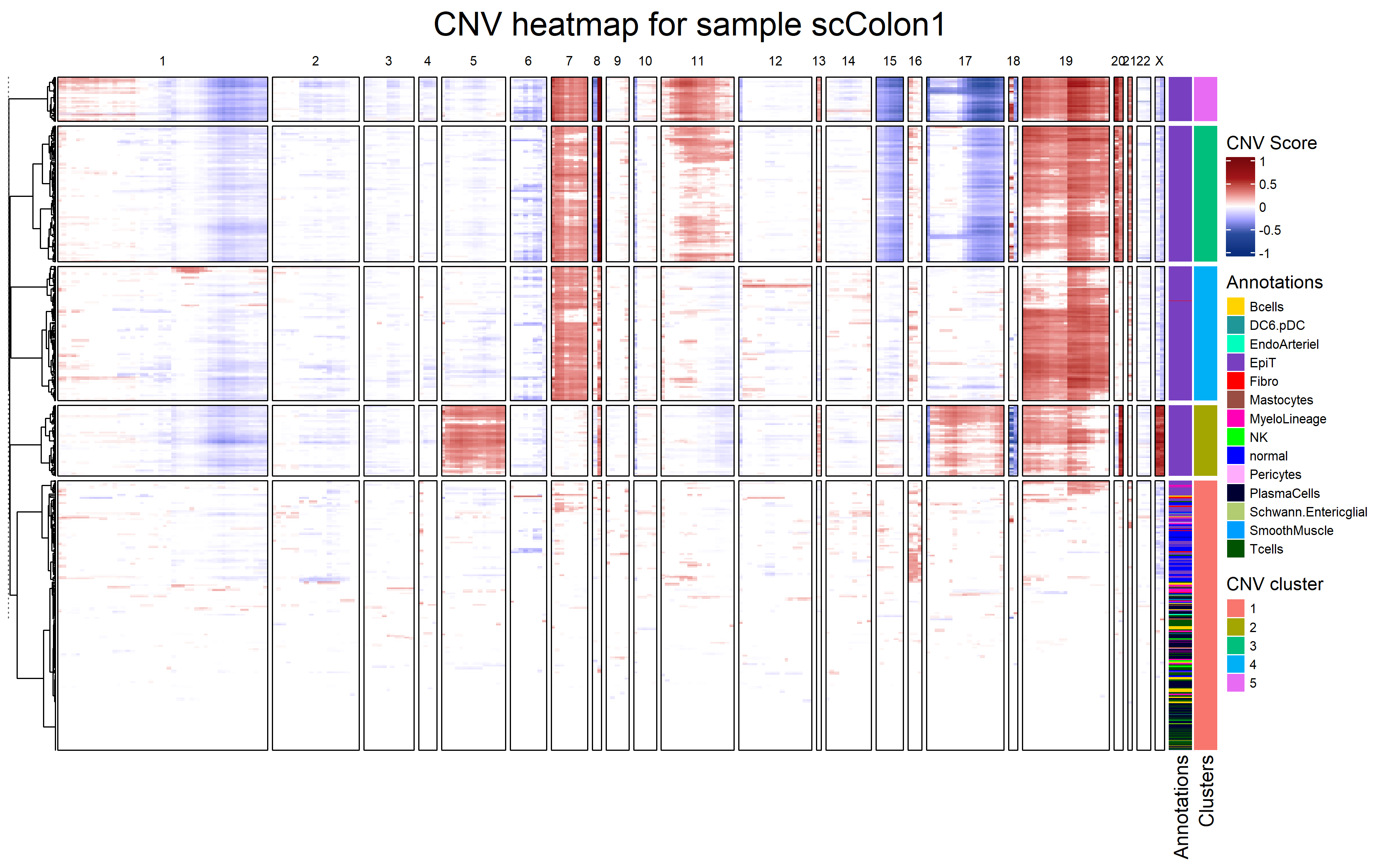
Heatmaps are produced using ComplexHeatmap.
- You can customize annotation colors with
referencePaletteorclusterPalette. - You can also choose which annotations to display and how to split the data.
By default, fastCNV uses the 16 µm bin size. You can increase the resolution, but note that higher resolution requires more computational resources.
Apart from binning and clustering, the pipeline works the same way as for other supported data types.
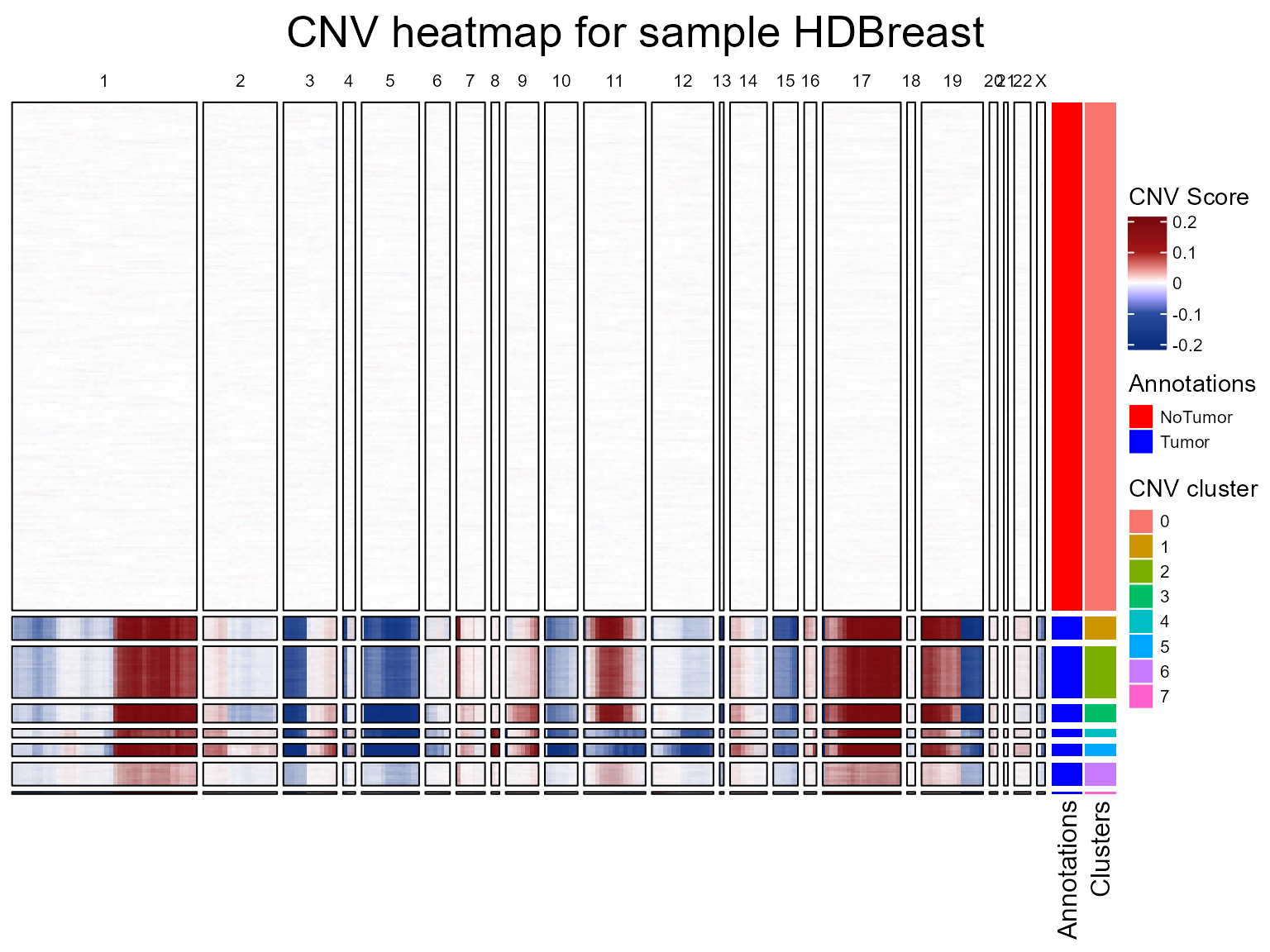
fastCNV can plot a heatmap of inferred CNVs:
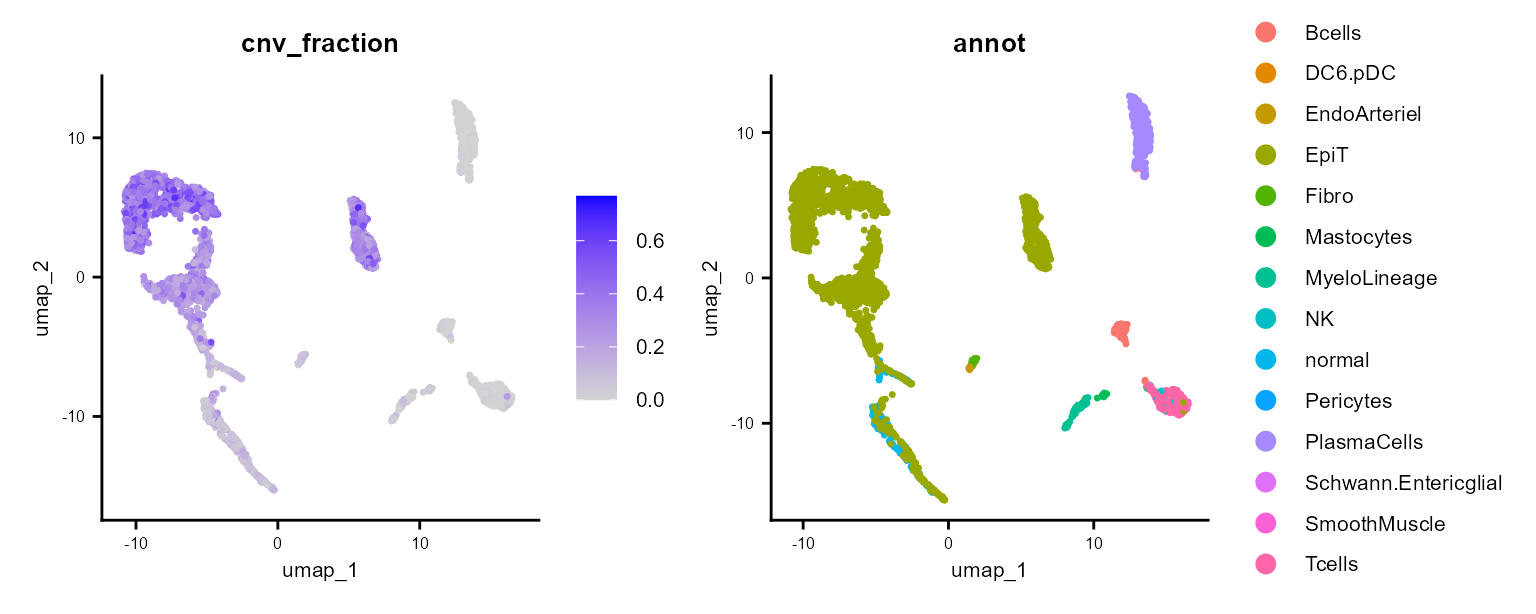
It also calculates a cnv_fraction, which can be plotted with Seurat standard plotting functions:
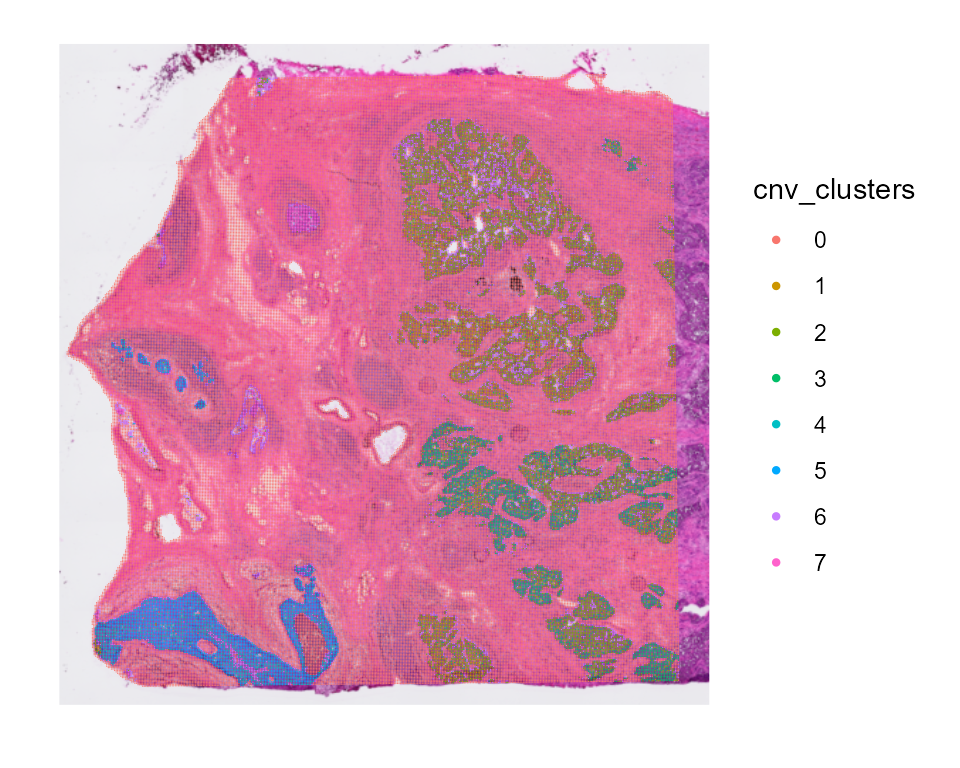
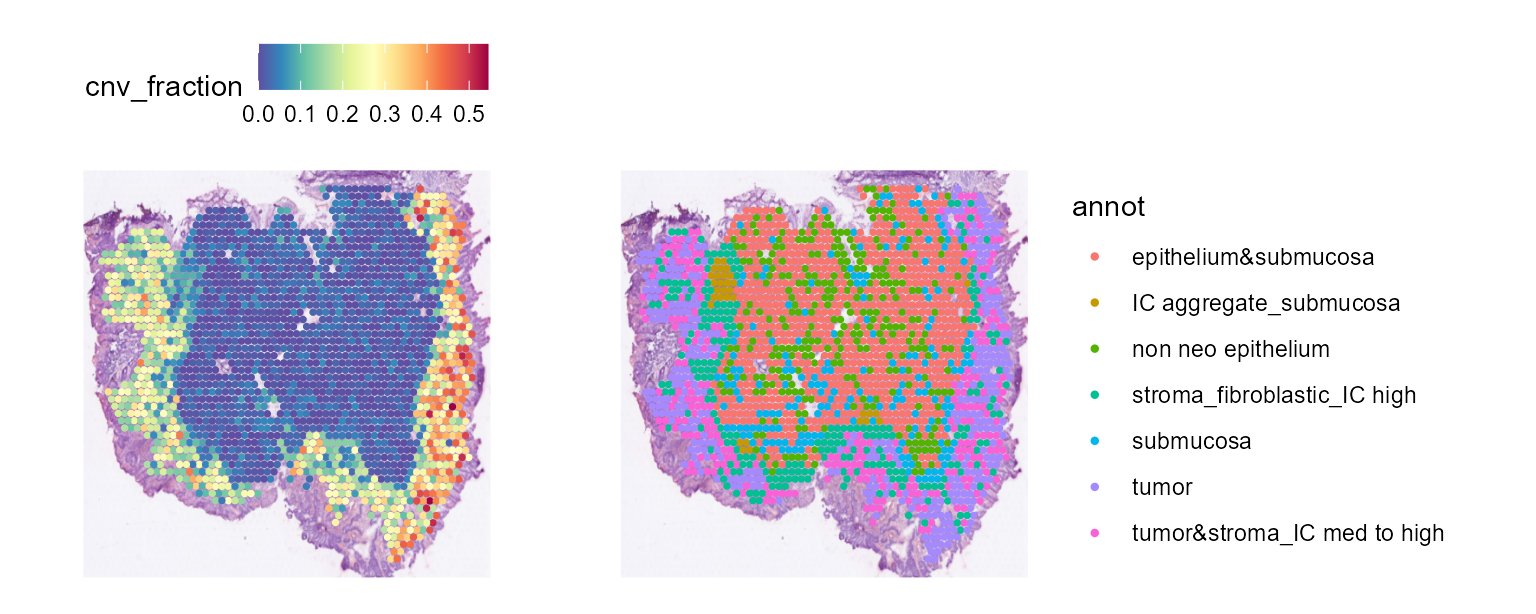
cnv_fractions can also be visualized spatially for Spatial Transcriptomics samples:
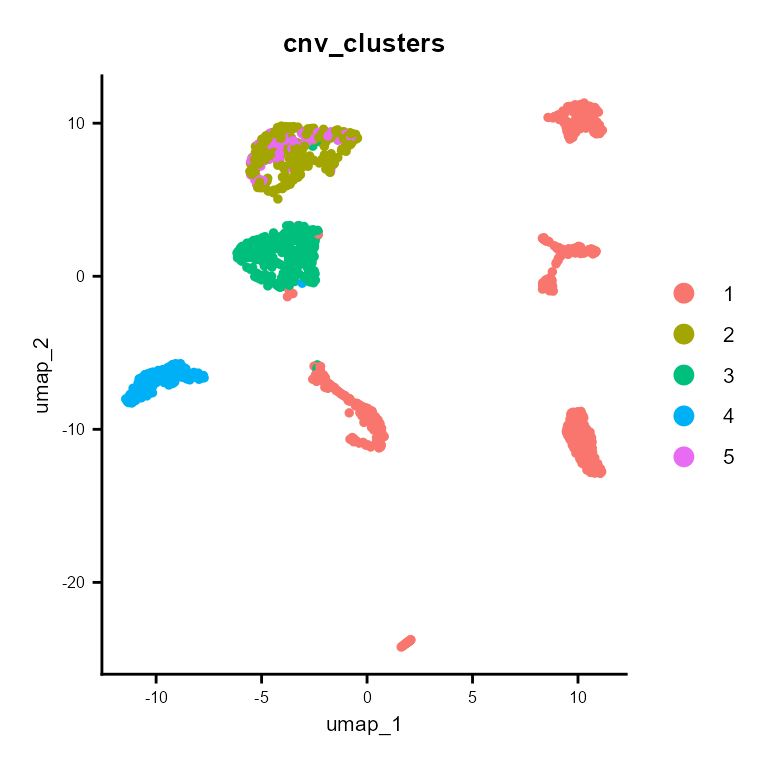
And cnv_fractions can be used to obtain clonal clusters (cnv_clusters):
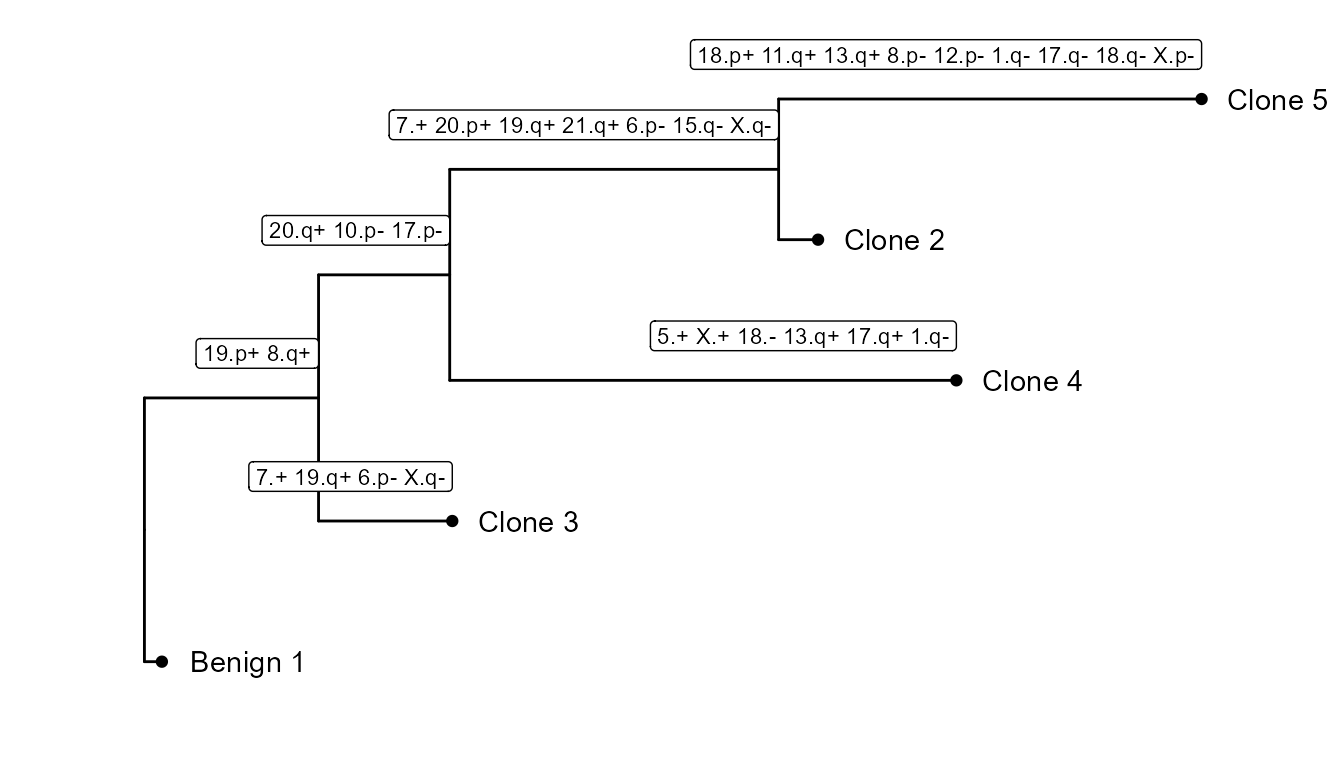
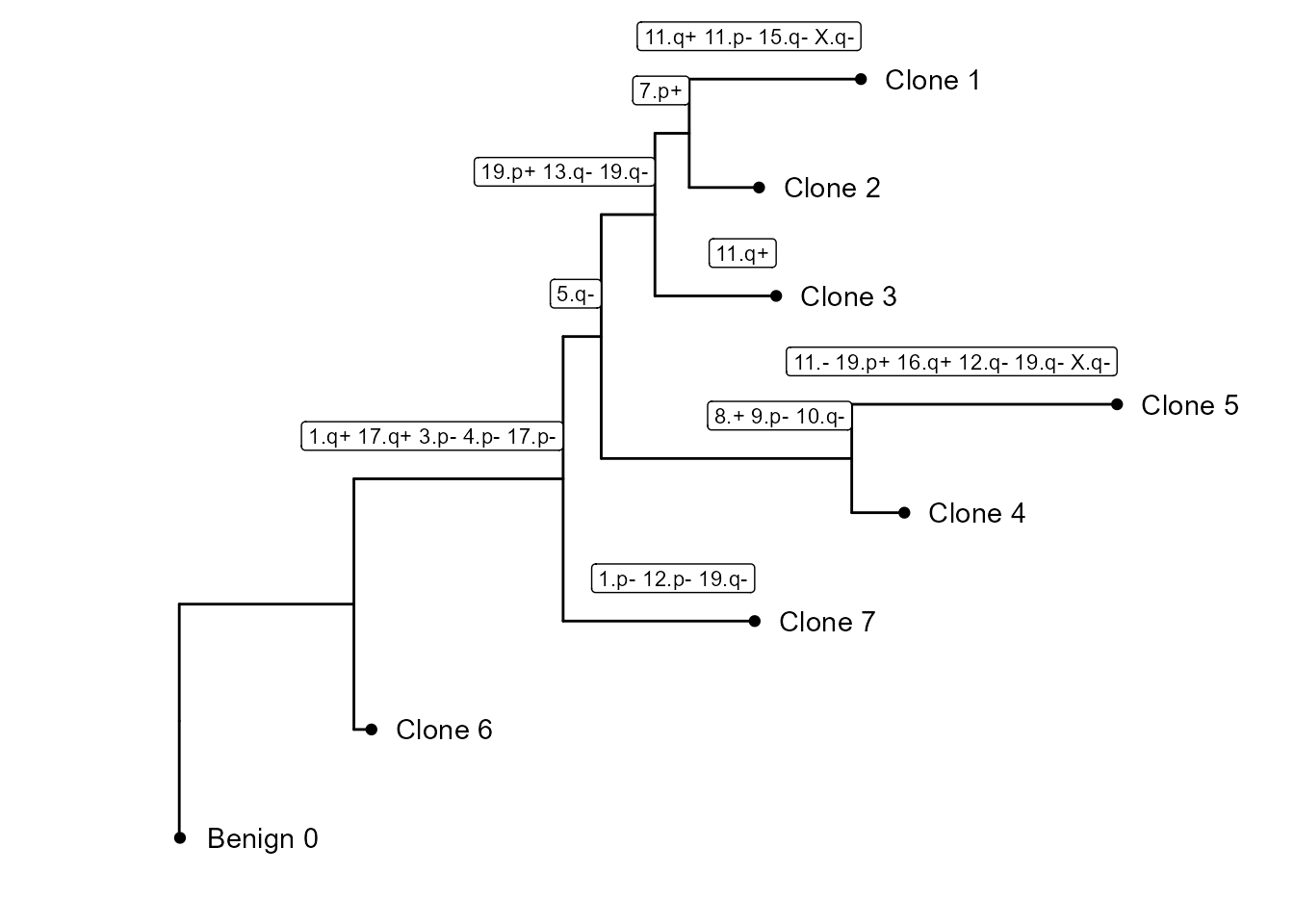
It also builds a subclonality tree based on the CNV clusters: