








Installation Guide | readthedocs | Introduction on Colab | HowToLens
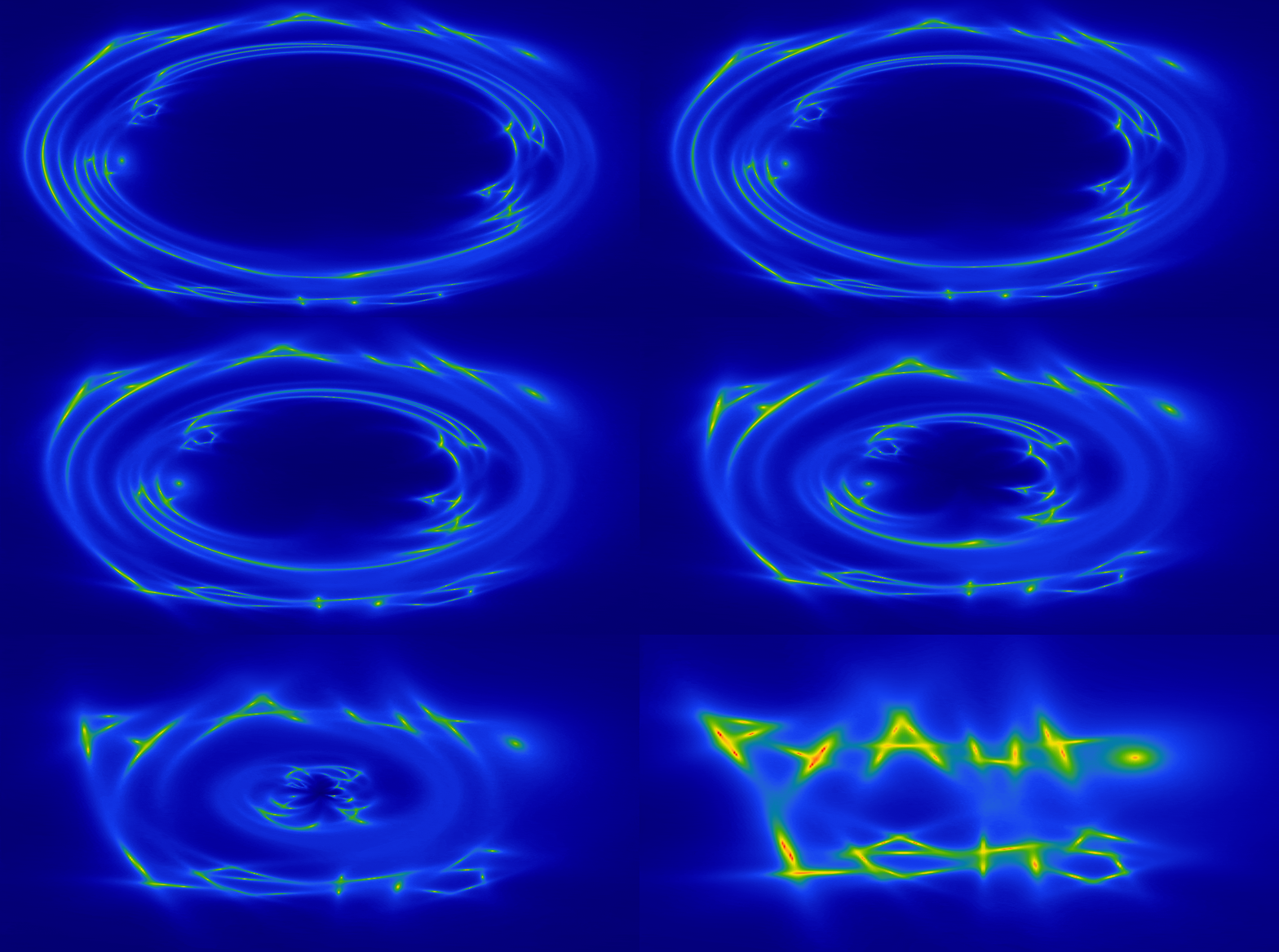
When two or more galaxies are aligned perfectly down our line-of-sight, the background galaxy appears multiple times.
This is called strong gravitational lensing and PyAutoLens makes it simple to model strong gravitational lenses, using JAX to accelerate lens modeling on GPUs.
The following links are useful for new starters:
- The PyAutoLens readthedocs: which includes an overview of PyAutoLens's core features, a new user starting guide and an installation guide.
- The introduction Jupyter Notebook on Google Colab: try PyAutoLens in a web browser (without installation).
- The autolens_workspace GitHub repository: example scripts and the HowToLens Jupyter notebook lectures.
Support for PyAutoLens is available via our Slack workspace, where the community shares updates, discusses gravitational lensing analysis, and helps troubleshoot problems.
Slack is invitation-only. If you’d like to join, please send an email requesting an invite.
For installation issues, bug reports, or feature requests, please raise an issue on the GitHub issues page.
For users less familiar with gravitational lensing, Bayesian inference and scientific analysis you may wish to read through the HowToLens lectures. These teach you the basic principles of gravitational lensing and Bayesian inference, with the content pitched at undergraduate level and above.
A complete overview of the lectures is provided on the HowToLens readthedocs page.
Information on how to cite PyAutoLens in publications can be found on the citations page.
Information on how to contribute to PyAutoLens can be found on the contributing page.
Hands on support for contributions is available via our Slack workspace, again please email to request an invite.