Iris is a cluster of x86-64 Intel-based compute nodes. More precisely, Iris consists of 196 computational nodes named iris-[001-196] and features 3 types of computing resources:
- 168 "regular" nodes, Dual Intel Xeon Broadwell or Skylake CPU (28 cores), 128 GB of RAM
- 24 "gpu" nodes, Dual Intel Xeon Skylake CPU (28 cores), 4 Nvidia Tesla V100 SXM2 GPU accelerators (16 or 32 GB), 768 GB RAM
- 4 "bigmem" nodes: Quad-Intel Xeon Skylake CPU (112 cores), 3072 GB RAM
| Hostname (#Nodes) | Node type | Processor | RAM |
|---|---|---|---|
iris-[001-108] (108) |
Regular Broadwell | 2 Xeon E5-2680v4 @ 2.4GHz [14c/120W] | 128 GB |
iris-[109-168] (60) |
Regular Skylake | 2 Xeon Gold 6132 @ 2.6GHz [14c/140W] | 128 GB |
iris-[169-186] (18) |
Multi-GPU Skylake |
2 Xeon Gold 6132 @ 2.6GHz [14c/140W] 4x Tesla V100 SXM2 16G |
768 GB |
iris-[191-196] (6) |
Multi-GPU Skylake |
2 Xeon Gold 6132 @ 2.6GHz [14c/140W] 4x Tesla V100 SXM2 32G |
768 GB |
iris-[187-190] (4) |
Large Memory Skylake |
4 Xeon Platinum 8180M @ 2.5GHz [28c/205W] | 3072 GB |
Each Iris node rely on an Intel x86_64 processor architecture with the following performance:
| Processor Model | #core | TDP(*) | CPU Freq. (AVX-512 T.Freq.) |
[TFlops] |
[TFlops] |
|---|---|---|---|---|---|
|
Xeon E5-2680v4 (Broadwell) |
14 | 120W | 2.4GHz (n/a) |
0.538 TF | 0.46 TF |
|
Xeon Gold 6132 (Skylake) |
14 | 140W | 2.6GHz (2.3GHz) |
1.03 TF | 0.88 TF |
|
Xeon Platinum 8180M (Skylake) |
28 | 205W | 2.5GHz (2.3GHz) |
2.06 TF | 1.75 TF |
(*) The Thermal Design Power (TDP) represents the average power, in watts, the processor dissipates when operating at Base Frequency with all cores active under an Intel-defined, high-complexity workload.
??? info "Theoretical
- The **Broadwell** processors carry on **16 Double Precision (DP) ops/cycle** and support AVX2/FMA3.
- The selected **Skylake _Gold_** processors have two AVX512 units, thus they are capable of performing 32 DP ops/cycle YET only upon AVX-512 Turbo Frequency (_i.e._, the maximum all-core frequency in turbo mode) in place of the base non-AVX core frequency. The reported values are extracted from the [Reference Intel Specification documentation](https://www.intel.com/content/dam/www/public/us/en/documents/specification-updates/xeon-scalable-spec-update.pdf).

Then $R_\text{peak} = ops/cycle \times Freq. \times \#Cores$ with the appropriate frequency (2.3 GHz instead of 2.6 for our Skylake processors).

With regards the _estimation_ of the Maximum Performance $R_\text{max}$, an efficiency factor of 85% is applied.
It is computed from the expected performance runs during the [HPL](http://www.netlib.org/benchmark/hpl/index.html) benchmark workload.
Iris is equipped with 96 NVIDIA Tesla V100-SXM2 GPU Accelerators with 16 or 32 GB of GPU memory, interconnected within each node through NVLink which provides higher bandwidth and improved scalability for multi-GPU system configurations.
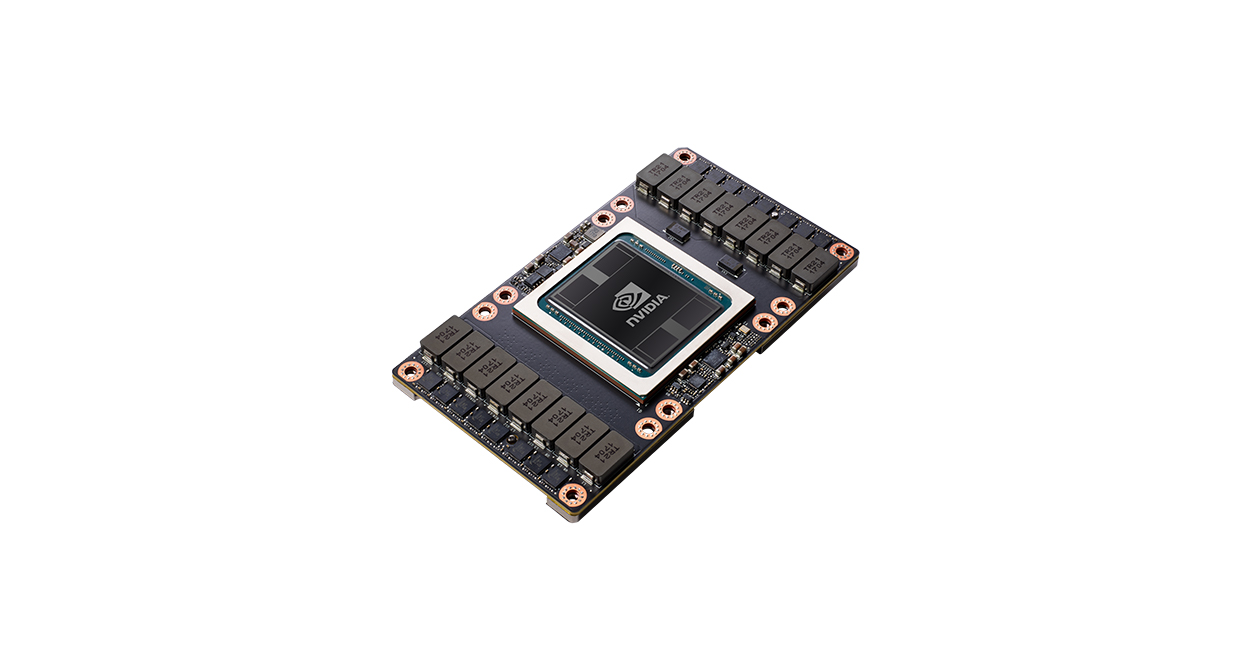
| NVidia GPU Model | #CUDA core | #Tensor core | Power | Interconnect Bandwidth |
GPU Memory |
[TFlops] |
|---|---|---|---|---|---|---|
| V100-SXM2 | 5120 | 640 | 300W | 300 GB/s | 16GB | 7.8 TF |
| V100-SXM2 | 5120 | 640 | 300W | 300 GB/s | 32GB | 7.8 TF |
These nodes are packaged within Dell PowerEdge C6300 chassis, each hosting 4 PowerEdge C6320 blade servers.

Iris comprises 108 Dell C6320 "regular" compute nodes iris-001-108 relying on Broadwell Xeon processor generation, totalling 3024 computing cores.
- Each node is configured as follows:
- 2 Intel Xeon E5-2680v4 @ 2.4GHz [14c/120W]
- RAM: 128 GB DDR4 2400MT/s (4x16 GB DIMMs per socket, 8 DIMMs per node)
- SSD 120GB
- InfiniBand (IB) EDR ConnectX-4 Single Port
- Theoretical Peak Performance per Node:
$R_\text{peak}$ 1.075 TF (see processor performance)
!!! info "Reserving a Broadwell node"
If you want to specifically reserve a broadwell node (iris-[001-108]), you should use the feature -C broadwell on the batch partition: {sbatch|srun|salloc} -p batch -C broadwell [...]
Iris also features 60 Dell C6320 "regular" compute nodes iris-109-168 relying on Skylake Xeon processor generation, totalling 1680 computing cores.
- Each node is configured as follows:
- 2 Intel Xeon Gold 6132 @ 2.6GHz [14c/140W]
- RAM: 128 GB DDR4 2400MT/s (4x16 GB DIMMs per socket, 8 DIMMs per node)
- SSD 120GB
- InfiniBand (IB) EDR ConnectX-4 Single Port
- Theoretical Peak Performance per Node:
$R_\text{peak}$ 2.061 TF (see processor performance)
!!! info "Reserving a Regular Skylake node"
If you want to specifically reserve a regular skylake node (iris-[109-168]), you should use the feature -C skylake on the batch partition: {sbatch|srun|salloc} -p batch -C skylake [...]
Iris includes 24 Dell PowerEdge C4140 "gpu" compute nodes embedding on total 96 NVIDIA Tesla V100-SXM2 GPU Accelerators.
- Each node is configured as follows:
- 2 Intel Xeon Gold 6132 @ 2.6GHz [14c/140W]
- RAM: 768 GB DDR4 2666MT/s (12x 32 GB DIMMs per socket, 24 DIMMs per node)
- 1 Dell NVMe 1.6TB
- InfiniBand (IB) EDR ConnectX-4 Dual Port
- 4x NVIDIA Tesla V100-SXM2 GPU Accelerators over NVLink
-
iris-[169-186]feature 16G GPU memory - use-C voltaas slurm feature -
iris-[191-196]feature 32G GPU memory - use-C volta32as slurm feature
-
- Theoretical Peak Performance per Node:
$R_\text{peak}$ 33.26 TF (see processor performance and accelerators performance)
!!! info "Reserving a GPU node"
Multi-GPU Compute Nodes can be reserved using the gpu partition. Use the -G [<type>:]<number> to specify the total number of GPUs required for the job
```bash
# Interactive job on 1 GPU nodes with 1 GPU
si-gpu -G 1
nvidia-smi      # Check allocated GPU

# Interactive job with 4 GPUs on the same node, one task per gpu, 7 cores per task
si-gpu -N 1 -G 4 --ntasks-per-node 4 --ntasks-per-socket 2 -c 7

# Job submission on 2 nodes, 4 GPUs/node and 4 tasks/node:
sbatch -p gpu -N 2 -G 4 --ntasks-per-node 4 --ntasks-per-socket 2 -c 7 launcher.sh
```
!!! warning "Do NOT reserve a GPU node if you don't need a GPU!" Multi-GPU nodes are scarce (and very expansive) resources and should be dedicated to GPU-enabled workflows.
??? tips "16 GB vs. 32 GB Onboard GPU Memory"
- Compute nodes with Nvidia V100-SMX2 16GB accelerators are registrered with the -C volta feature.
- it corresponds to the 18 Multi-GPU compute nodes iris-[169-186]
- If you want to reserve GPUs with more memory (i.e. 32GB on-board HBM2), you should use -C volta32
- you would then end on one of the 6 Multi-GPU compute nodes iris-[191-196]
Iris holds 4 Dell PowerEdge R840 Large-Memory ("bibmem") compute nodes iris-[187-190], totalling 448 computing cores.
- Each node is configured as follows:
- 4 Xeon Platinum 8180M @ 2.5GHz [28c/205W]
- RAM: 3072 GB DDR4 2666MT/s (12x64 GB DIMMs per socket, 48 DIMMs per node)
- 1 Dell NVMe 1.6TB
- InfiniBand (IB) EDR ConnectX-4 Dual Port
- Theoretical Peak Performance per Node:
$R_\text{peak}$ 8.24 TF (see processor performance)
!!! info "Reserving a Large-Memory node"
These nodes can be reserved using the bigmem partition: {sbatch|srun|salloc} -p bigmem [...]
!!! danger "DO NOT use bigmem nodes..." ... Unless you know what you are doing. We have too few large-memory compute nodes so kindly keep them for workloads that truly need these kind of expansive resources.
- _In short_: **carefully check your workflow and memory usage before considering using these node!**
  - use `seff <jobid>` or `sacct -j <jobid> [...]` for instance