참고 동작 방식 링크 : https://visualgo.net/en/sorting
- 어떤 데이터들이 주어졌을때, 이를 정해진 순서대로 나열하는 것
- 뭔가를
정렬하는 것- A부터 Z까지 기준으로 정렬
- 큰 수에서 작은 수 기준으로 정렬
- 데이터를 특정한 기준에 따라서 순서대로 나열하는 것
- 프로그램 작성 시 가장 많이 사용
이진검색처럼 빠른 알고리즘 사용을 위해서- 알고리즘의
효율성을 쉽게 이해 가능 - 내림차순은 오름차순은 reverse를 이용해서 뒤집으면 됨
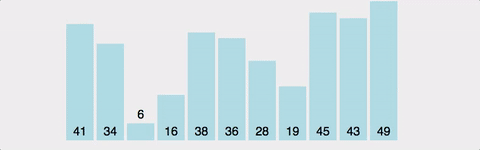
- 두 인접한 데이터를 비교해서 , 앞에 있는 데이터가 뒤에 있는 데이터보다 크면, 자리를 바꾸는 알고리즘
- 자주 사용되지는 않음 더 빠른 알고리즘이 많기 때문이다.
-
배열의 2개의 아이템을
선택 -
비교(comparisons): 왼쪽이 오른쪽보다 크면교환(swap) -
오른쪽으로
이동해서, 해당 프로세스반복, 예를 들어 5와 6을 비교⇒ 왼쪽이 오른쪽보다 작으므로 교환하지 않음
- 그 다음은 6과 3을 비교 ⇒ 교환 결과 : 2 5 3 6 1 4
- 6과 1을 비교 ⇒ 교환 결과 : 2 5 3 1 6 4
- 6과 4를 비교 ⇒ 교환 결과 : 2 5 3 1 4 6 ⇒ 첫번째 사이클 끝 두번째도 왼쪽에서 처음부터 바꿈
-
comparisons(비교) :
N-1N(item의 마지막 번호), 배열의 N-1의 아이템을 비교
EX. 아이템이 6개면, 5번 비교
-
swap(교환): 최악의 경우, 모든 아이템을 교환해야 함
-
그래프
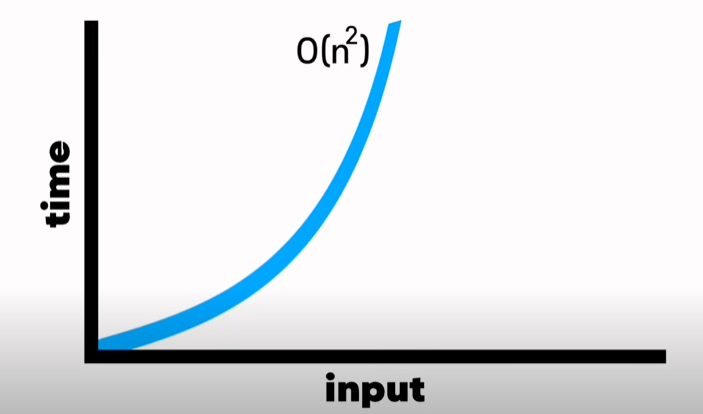
버블 정렬은 간단하지만 큰 리스트에 대해서는 비효율적일 수 있으니 참고
import java.util.ArrayList;
import java.util.Collections;

public class BubbleSorting {

    public static void main(String[] args){
        ArrayList<Integer> dataList = new ArrayList<Integer>();
        dataList.add(9);
        dataList.add(2);
        dataList.add(4);
        dataList.add(8);
        dataList.add(1);

        // 9, 7, 1
        for(int index=0; index < dataList.size()-1; index++) {
            boolean swap = false;
            // 7, 9, 1
            for(int index2 = 0; index2 < dataList.size() - 1 - index; index2++) {
                if (dataList.get(index2) > dataList.get(index2 + 1)) {
                    Collections.swap(dataList, index2, index2 + 1);
                    // 1, 7, 9
                    swap = true;
                }
            }
        }
        System.out.println(dataList);
    }
}- 기존 코드의 클래스를 이용해서 만드는 방법
- BubbleSorting2
package sorting;

import java.util.ArrayList;
import java.util.Collections;

public class BubbleSorting2
{

	public void sort(ArrayList arr) {
		ArrayList<Integer> dataList = new ArrayList<Integer>();
		dataList = arr;

		for (int index = 0; index < dataList.size() - 1; index++)
		{
			boolean swap = false;

			for (int index2 = 0; index2 < dataList.size() - 1 - index; index2++)
			{
				if (dataList.get(index2) > dataList.get(index2 + 1))
				{
					Collections.swap(dataList, index2, index2 + 1);
					swap = true;
				}
			}
			System.out.println(dataList);
		}
	}

}- BublleSorting
import java.util.ArrayList;

public class BubbleSorting
{

    public static void main(String[] args)
    {
        ArrayList<Integer> testList = new ArrayList<Integer>();

        for (int index = 0; index < 10; index++)
        {
            testList.add((int)(Math.random() * 100));

        }
        System.out.println(testList);

        BubbleSorting2 bSort = new BubbleSorting2();

        bSort.sort(testList);

    }

}import java.util.ArrayList;
import java.util.Collections;
import java.util.Scanner;
public class BubbleSorting3 {
private ArrayList<Integer> sort(ArrayList<Integer> dataList){
for(int index=0; index < dataList.size()-1; index++) {
boolean swap = false;
for(int index2 = 0; index2 < dataList.size() - 1 - index; index2++) {
if (dataList.get(index2) > dataList.get(index2 + 1)) {
Collections.swap(dataList, index2, index2 + 1);
swap = true;
}
}
for(int i = 0; i<dataList.size(); i++) {
System.out.print(dataList.get(i)+ " ");
}
System.out.println();
}
return dataList;
}
public static void main(String[] args){
Scanner in = new Scanner(System.in);
ArrayList<Integer> dataList = new ArrayList<Integer>();
int n = in.nextInt();
for(int i=0; i<n; i++){
dataList.add(in.nextInt());
}
BubbleSorting3 bubbleSort = new BubbleSorting3();
bubbleSort.sort(dataList);
}
}- 다른 사람 코드
import java.util.Scanner;

public class Main {

   public static void main(String[] args) {
       Scanner sc = new Scanner(System.in);
        int numlength = sc.nextInt();
        int [] arr = new int [numlength];

       for (int i = 0; i < numlength; i++) {
           arr[i] = sc.nextInt();
       }


       for (int i = 0; i < numlength-1; i++) {


           for (int j = 0; j < numlength-1; j++) {

               if (arr[j] > arr[j+1])
               {
                   int temp = arr[j];
                   arr[j]=arr[j+1];
                   arr[j+1]=temp;

               }

           }

           for (int j = 0; j < numlength; j++) {
               System.out.printf("%d ", arr[j]);
           }
           System.out.println();


           }

       }

}- 파이썬 코드
def bubble_sort(arr):
    end = len(arr) - 1
    while end > 0:
        last_swap = 0
        for i in range(end):
            if arr[i] > arr[i + 1]:
                arr[i], arr[i + 1] = arr[i + 1], arr[i]
                last_swap = i
        end = last_swap
print(arr)- 전체 모든 아이템 스캔
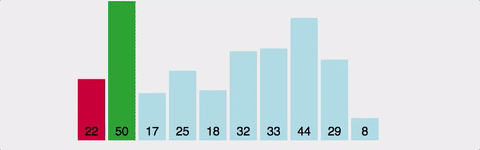
- 데이터가 무작위로 여러 개 있을 때, 이중에서 가장 작은 데이터를 선택해 맨 앞에 있는 데이터와 바꾸고, 그다음 작은 데이터를 선택해 앞에서 두 번째 데이터와 바꾸는 과정 반복
- 현재 데이터의 상태 상관없이 무조건 모든 원소를 비교하고 위치를 바꿈
가장 작은 것을 선택,비효율적
-
전체 아이템 중 가장 작은 아이템의 위치를 그 위치를 변수에 저장
-
5부터 차례로 확인 후 맨 처음은 5가 제일 작기때문에 위치를 변수에 저장
-
그 다음 2에서 2가 5보다 작으니까 위치를 변수에 저장
-
쭉 하다가 1이 2보다 작으니까 위치를 변수 저장
-
4까지 확인 후 사이클을 끝냄
⇒ 배열에서 가장 작은 숫자가 어디에 있는지 안다
-
그 다음
swaps(바꾸기): 가장 작은 숫자(위치를 알지!) 그것을 첫 번째 아이템과 바꿈 -
그 다음 사이클을 진행시 1부터 시작하지 않음. 1은
정렬된 숫자, 정렬되지 않은 부분 중에서 가장 작은 숫자를 찾음 -
이것을 반복
import java.util.ArrayList;
import java.util.Collections;

public class SelectionSortingEx {

    private ArrayList<Integer> sort(ArrayList<Integer> dataList){
        int lowest;
        for(int stand = 0; stand < dataList.size()-1; stand++){
            lowest = stand;
            for(int index = stand+1; index < dataList.size(); index++){
                if(dataList.get(lowest) > dataList.get(index)) {
                    lowest = index;
                }
            }
            Collections.swap(dataList, lowest, stand);
        }

        return dataList;
    }

    public static void main(String[] args){
        ArrayList<Integer> testData = new ArrayList<Integer>();

        for(int i=0; i<10; i++){
            testData.add((int)(Math.random()*100));
        }
        SelectionSortingEx selection = new SelectionSortingEx();
        System.out.println(selection.sort(testData));
    }
}- 정올 문제 : https://jungol.co.kr/problem/1146/submission?cursor=eyJwcm9ibGVtc2V0IjoiNiIsImZpZWxkIjo2LCJpZHgiOjB9
- 코드
import java.util.ArrayList;
import java.util.Collections;
import java.util.Scanner;

public class SelectionSortingEx2 {

    private ArrayList<Integer> sort(ArrayList<Integer> dataList){
        int lowest;
        for(int stand = 0; stand < dataList.size()-1; stand++){
            lowest = stand;
            for(int index = stand+1; index < dataList.size(); index++){
                if(dataList.get(lowest) > dataList.get(index)) {
                    lowest = index;
                }
            }
            Collections.swap(dataList, lowest, stand);
            for(int i = 0; i<dataList.size(); i++) {
                System.out.print(dataList.get(i)+ " ");
            }
            System.out.println();
        }

        return dataList;
    }

    public static void main(String[] args){
        Scanner in = new Scanner(System.in);
        ArrayList<Integer> testData = new ArrayList<Integer>();

        int n = in.nextInt();

        for(int i=0; i<n; i++){
            testData.add(in.nextInt());
        }
        SelectionSortingEx2 selection = new SelectionSortingEx2();
        selection.sort(testData);
    }
}- 선택 정렬 다른 사람 코드
import java.util.Scanner;

public class Main {

    public static void main(String[] args) {
        Scanner scan = new Scanner(System.in);
        int i, j, n;
        int arr[] = new int [101];
        int big = 0;

        n = scan.nextInt();

        for (i = 0; i < n; i++) {
            arr[i] = scan.nextInt();
        }

        for (i = 0; i < n-1; i++) {
            int small = arr[i];
            int pos = i;
            for (j = i; j < n; j++) {
                if (small > arr[j]) {
                    small = arr[j];
                    pos = j;
                }
            }
            int c = arr[i];
            arr[i] = arr[pos];
            arr[pos] = c;

            for (j = 0; j < n; j++) {
                System.out.printf("%d ", arr[j]);
            }
            System.out.printf("\n");

        }
    }

}- 파이썬 코드
def selection_sort(arr):
    for i in range(len(arr) - 1):
        min_idx = i
        for j in range(i + 1, len(arr)):
            if arr[j] < arr[min_idx]:
                min_idx = j
        arr[i], arr[min_idx] = arr[min_idx], arr[i]
print(arr)- 필요한 아이템만 스캔
- 선택정렬보다 빠름, 효율적
- 데이터를 하나씩 확인하며, 각 데이터를 적절한 위치에 삽입
⇒ 필요한 때만 위치를 바꾸므로 데이터가 거의 정렬되어 있을 때 훨씬 효율적
-
특정한 데이터를 적절한 위치에 ‘삽입’한다는 의미
⇒ 특정한 데이터가 적절한 위치에 들어가기 이전에, 그 앞까지의 데이터는 이미
정렬되어 있다고 가정
-
인덱스 1부터 시작시, 왼쪽에 숫자 ‘2’보다 큰 숫자가 있는지 확인
⇒ 두 번째 데이터 부터 시작하는 이유는 첫 번째는 그 자체로 정렬되어 있다고 판단
Left > Right -
2와 5 자리 바꾸기
swap -
2번째 사이클 : 6을 선택, 왼쪽에 더 큰 숫자가 있는지 확인, 오른쪽이 더 크기 때문에 계속 진행
Left < Right -
3번째 사이클 : 3을 선택, 왼쪽에 더 큰 숫자가 있는지 확인,
Left > Right -
6과 3을
swap -
3 왼쪽에 있는 5를 비교(comparisons)
Left > Right -
5과 3을
swap -
3에 왼쪽에 있는 2는 3보다 작기 때문에 안바꿈
-
반복
❗ 삽입 정렬은, 정렬이 이루어진 원소는 항상
오름차순을 유지하기 때문에, 특정한 데이터가 삽입될 위치를 선정할 때(삽입될 위치를 찾기 위하여 왼쪽으로 한 칸씩 이동할 때) 삽입될 데이터보다 작은 데이터를 만나면 그 위치에서 멈추면 된다.
💡 특정한 데이터의 왼쪽에 있는 데이터들은 이미 정렬이 된 상태이므로 자기보다 작은 데이터를 만났다면, 더 이상 데이터 살펴볼 필요 없이 삽입하면 됨
import java.util.ArrayList;
import java.util.Collections;

public class InsertionSort {

    public ArrayList<Integer> sort(ArrayList<Integer> dataList){
        for(int index=0; index<dataList.size()-1; index++){
            for(int index2 = index + 1; index2 > 0; index2--){
                if(dataList.get(index2) < dataList.get(index2-1)){
                    Collections.swap(dataList, index2, index2-1);
                }
                else{
                    break;
                }
            }
        }
        return dataList;
    }

    public static void main(String[] args) {
        ArrayList<Integer> dataList = new ArrayList<Integer>();

        for (int i = 0; i < 10; i++) {
            dataList.add((int) (Math.random() * 100));
        }
        InsertionSort insertion = new InsertionSort();
        System.out.println(insertion.sort(dataList));
    }
}import java.util.ArrayList;
import java.util.Collections;
import java.util.Scanner;
public class Main {
public ArrayList<Integer> sort(ArrayList<Integer> dataList){
for(int index=0; index<dataList.size()-1; index++){
for(int index2 = index + 1; index2 > 0; index2--){
if(dataList.get(index2) < dataList.get(index2-1)){
Collections.swap(dataList, index2, index2-1);
}
else{
break;
}
}
for(int i = 0; i<dataList.size(); i++) {
System.out.print(dataList.get(i)+ " ");
}
System.out.println();
}
return dataList;
}
public static void main(String[] args) {
ArrayList<Integer> dataList = new ArrayList<Integer>();
Scanner in = new Scanner(System.in);
int n = in.nextInt();
for (int i = 0; i < n; i++) {
dataList.add(in.nextInt());
}
Main insertion = new Main();
insertion.sort(dataList);
}
}- 다른 사람 코드
import java.util.Scanner;

public class Main {

    public static void main(String[] args) {
        // TODO Auto-generated method stub
        Scanner scan = new Scanner(System.in);

        int n, i, j;
        int arr[] = new int[101];

        n = scan.nextInt();

        for (i = 0; i < n; i++) {
            arr[i] = scan.nextInt();
        }

        for (i = 1; i < n; i++) {
            for (j = i; j > 0; j--) {
                if (arr[j] < arr[j - 1])
                {
                    int c = arr[j];
                    arr[j]=arr[j-1];
                    arr[j-1]=c;
                }
                else break;
            }
            for (j = 0; j < n; j++) {
                System.out.printf("%d ", arr[j]);
            }
            System.out.printf("\n");
        }
    }
}array = [7, 5, 9, 0, 3, 1, 6, 2, 4, 8]
for i in range(1, len(array)):
for j in range(i, 0, -1): # j변수가 인덱스 i부터 1까지 1씩 감소하면서 반복하는 문법
if array[j] < array[j-1]: # 한 칸 씩 왼쪽으로 이동
array[j], array[j-1] = array[j-1], array[j]
else: # 자기보다 작은 데이터를 만나면 그 위치에서 멈춤
break
print(array)💡 range의 세 번째 변수 : range의 매개변수는 3개
(start, end, step)이다. 세 번째 매개변수인 step에 -1이 들어가면 start인덱스부터 시작해서 end+1인덱스까지 1씩 감소한다.
-
시간복잡도 :
$O(N^2)$ ⇒ 2중 반복문을 이용하기 때문
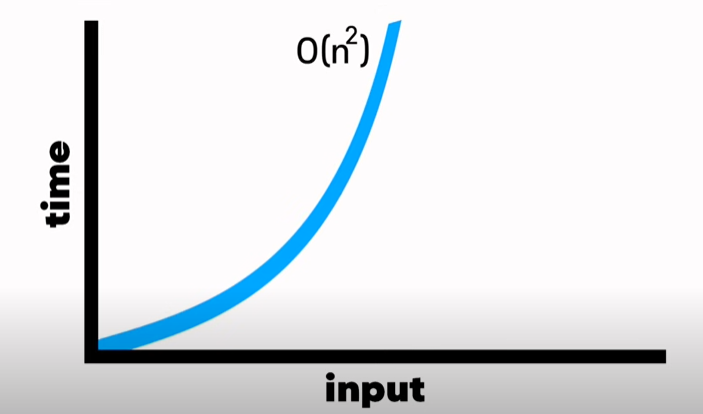
⇒ 선택정렬보다 빨라도 시간복잡도는 같음
⇒ 삽입 정렬은 현재 리스트의 데이터가 거의 정렬되어 있는 상태라면 매우 빠르게 동작
✨ 시간복잡도가 동일한 이유는 최악의 시나리오를 보지말고, 평균 시나리오를 봐야 하기 때문
- 버블 정렬
- 맨 처음에 있는 것을 저장 후 다음 있는 것을 비교 해서 다음 것이 지금 있는 것보다 적다면 그 수를 swap함 ⇒ 이런식으로 반복
public static void bubbleSort(int[] array) {
    int n = array.length;
    for (int i = 0; i < n - 1; i++) {    // 모든 요소를 순회
        for (int j = 0; j < n - i - 1; j++) {  // i까지는 이미 정렬되었으므로 비교할 필요가 없음
            if (array[j] > array[j + 1]) {    // 다음 요소가 현재 요소보다 작으면 교환
                int temp = array[j];
                array[j] = array[j + 1];
                array[j + 1] = temp;
            }
        }
    }
}- 파이썬 코드
def bubble_sort(arr):
    n = len(arr)
    for i in range(n):
        for j in range(0, n-i-1):
            if arr[j] > arr[j+1]:
                arr[j], arr[j+1] = arr[j+1], arr[j]

# 사용 예시
arr = [5, 3, 8, 2, 1, 4]
bubble_sort(arr)
print("버블 정렬 결과:", arr)- 삽입 정렬
- 모든 데이터를 훑어봄 일단, 가장 작은 데이터를 선택해 맨 앞에 있는 데이터와 바꾸고, 그다음 작은 데이터를 선택해 앞에서 두 번째 데이터와 바꾸는 과정 반복
public static void insertionSort(int[] array) {
    int n = array.length;
    for (int i = 1; i < n; i++) {   // 두 번째 요소부터 시작
        int key = array[i];         // 현재 요소를 저장
        int j = i - 1;
        while (j >= 0 && array[j] > key) {   // 왼쪽의 모든 요소와 비교하여 key보다 큰 값은 오른쪽으로 이동
            array[j + 1] = array[j];
            j--;
        }
        array[j + 1] = key;     // key 값을 적절한 위치에 삽입
    }
}- 파이썬 코드
def insertion_sort(arr):
    n = len(arr)
    for i in range(1, n):
        key = arr[i]
        j = i - 1
        while j >= 0 and key < arr[j]:
            arr[j + 1] = arr[j]
            j -= 1
        arr[j + 1] = key

# 사용 예시
arr = [5, 3, 8, 2, 1, 4]
insertion_sort(arr)
print("삽입 정렬 결과:", arr)- 선택 정렬
- 필요할 때만 바꿔서 효율적
- 두 번째 즉, 1인덱스부터 훑어봄 왜냐 첫 번째꺼는 정렬되어 있다고 생각하니까
- 그리고 두번째가 왼쪽을 바라보고 왼쪽이 더 크다면 바꿈
- 이런식으로 적절한 위치에 넣기 때문에 거의 정렬되어 있다고 판단되는 것에 좋음
public static void selectionSort(int[] array) {
    int n = array.length;
    for (int i = 0; i < n - 1; i++) {    // 맨 마지막 요소는 자동으로 정렬되므로 n-1까지만 순회
        int minIndex = i;
        for (int j = i + 1; j < n; j++) {    // i 이후의 요소들과 비교하여 최솟값의 위치를 찾음
            if (array[j] < array[minIndex]) {
                minIndex = j;
            }
        }
        int temp = array[minIndex];     // 최솟값을 현재 위치로 이동
        array[minIndex] = array[i];
        array[i] = temp;
    }
}- 파이썬 코드
def selection_sort(arr):
    n = len(arr)
    for i in range(n):
        min_index = i
        for j in range(i+1, n):
            if arr[j] < arr[min_index]:
                min_index = j
        arr[i], arr[min_index] = arr[min_index], arr[i]

# 사용 예시
arr = [5, 3, 8, 2, 1, 4]
selection_sort(arr)
print("선택 정렬 결과:", arr)